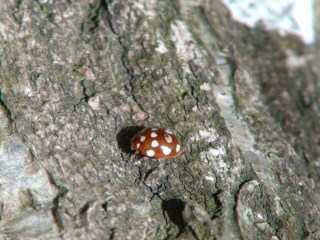
A visit to North’s Seat proved a delight after recent conservation works by the Volunteers Conservation Group. The improved environment they had created enabled easy appreciation of the smaller wildlife that this site has in abundance. A Hawthorn Leaf Beetle (upper picure) and a 10-spot Ladybird, plus four different species of Weevil were all found in a short time within this site. Identification of weevils isn’t easy and two of the species have yet to be confirmed, but there were plenty of Gorse Weevils and Pea Weevils. One of the remaining two is thought to be Anthonomus pedicularius (lower picture, no common name). 

North’s Seat Wildlife
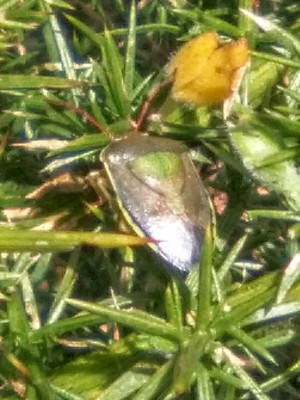
This week we have been doing some “weeding” at both the heather patches at North’s Seat, removing bramble and cutting gorse to encourage the heather to spread. We were lucky enough to see some of the smaller wildlife too. First was a gorse shield bug and here is Sam’s photo.
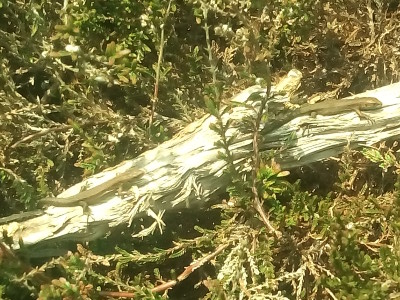
We finished the main part of the first block and moved to an area about 10ft diameter and about the same distance away and saw a common lizard, then another, then another……
I managed to get this picture of not one but two juveniles which I was pleased about.
Plenty of invertebrates, beyond my id skills in the field and a peacock butterfly.
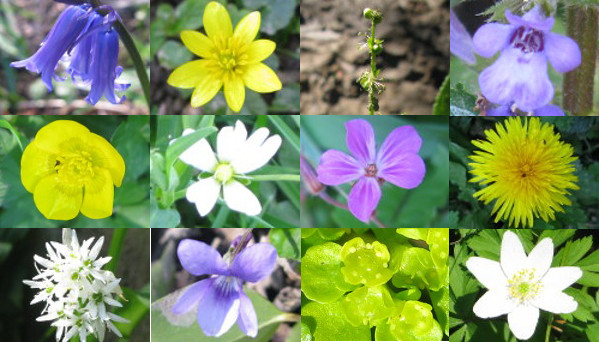
April wildflowers
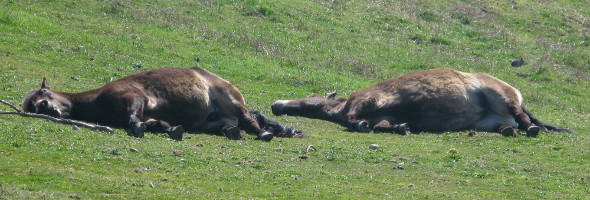
Sunbathing at Hastings Country Park
Whilst out today I spotted these two residents of the Country Park topping up their tans. Hard work this grazing!!
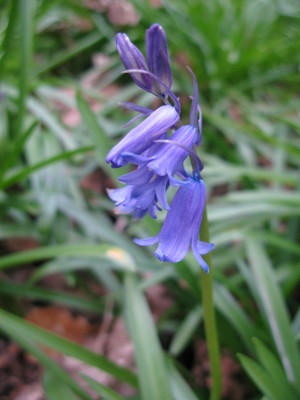
The bluebells on Brakey Bank are now getting towards their peak, so if you want to see them at their best get along there soon. Plenty of other wildflowers out now as well, more about them later.
Visitor Centre Hours
Visitor Centre page updated to show it is now open on Thursdays 10:00 am to 3:00 pm.
Brambling in the Quarry
Ok, that should have got the attention of loads of birders and some extra hits for the site!! This week we have been uprooting brambles from the areas in the Quarry that we cleared last year using a tool called a Lazy Dog which which Sam on the right in the first photo below is holding. We usually use these for pulling ragwort (that should get us some more hits too) but they are also great for removing bramble by the roots with the least disturbance to the ground. If not checked this bramble would spread all across the areas that we have spent so much time clearing and prevent the seedlings that we can now see from thriving.
This is Thursday’s pile which might not look much but there is a very large number of individual roots there. Sorry about the dinginess of the photo, it had been quite a nice day before that haze appeared. We also sadly had to say goodbye to Bob the Estate Ranger who has transferred over to HBC’s contractors The Landscape Group and will from now on be working from their depot at Alexandra Park but we may still see him up here from time to time.
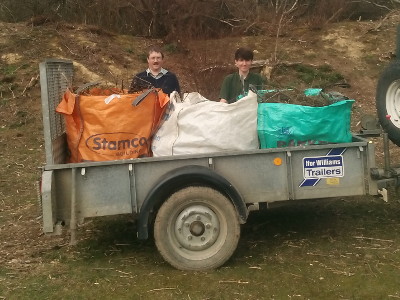
Here is Sunday’s haul all loaded into builders bags, ready to be taken back to the green waste recycling at the farm to be turned into compost along with all the other green waste from the borough that the contractors produce.
New steps into the Quarry
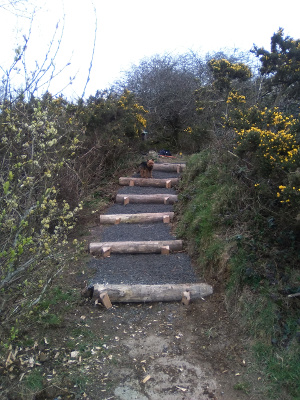
As a change this week we worked on Friday and replaced the top six steps down into the Quarry from the Visitor Centre side. In order for us to do this safely it was decided to close the path which led to the inevitable complaints from some visitors but it was only for a day and hardly a time of peak usage for the site. The old steps had come to the end of their life and had certainly lasted well. We also cleared the ashes up from our previous bonfires in the Quarry and moved the Heras fencing in preparation for our next bonfire at the Quarry face to dispose of arisings left from last year.
The Little Things in Life.
Taking a look at the national records for Gorse Weevil the closest records were on the Downs beyond Eastbourne, and they were the only records in the county. The species is described as being fairly frequent and widespread in England and Wales yet we had no records hereabouts, and there seem to be only 66 records nationally on the Biological Records Centre database, and 1566 records on the National Biodiversity Network database which goes back 200 years. Surely the gorse of the Country Park could furnish a record or two!
The Gorse Weevil is about 2mm long, is light grey in colour with a long snout half as long as its body. The adult feeds on Gorse by digging into the soft tissue of the stem and spines with its snout, creating characteristic round holes as evidence. The larva does more damage, however. It emerges from its egg inside the gorse seed pod and feeds on the seeds for six to eight weeks. The larva then pupates for about two months.
Taking the opportunity of a lull in the throng of visitors to the VC on Friday (!) gorse was beaten between the VC and the horseshoe car park, and there were 2 Gorse Weevils. Close examination under a x20 hand lens confirmed the species identification and records were duly submitted. Hastings Country Park is on the map once again.
There’ll be Bluebells over the Sandy Cliffs of Hastings Country Park
Having started my walk this afternoon in the sunshine for it only to become overcast with a distinct dampness in the air my mood was again lifted by the sight of the first bluebells on Brakey Bank. Not quite fully in bloom yet and looking at the sea of bluebell foliage we should soon be rewarded with the usual impressive display there.
It is also interesting to see bluebells coming up in places where the gorse has been cleared and the Exmoor Ponies/White Park Cattle have been active. Have these plants flowered hidden from our view in the past or have they been dormant? Either way this is an indicator of the value of recent management.
We have our quarry in sight
Last Thursday we did the last cutting in the Quarry ’till the autumn when we hope to finish opening up the quarry face. The narrow path that leads to the stone steps is now more open and should dry up faster.
Yesterday was again the first Sunday and finished clearing up the willow that we had cut down previously and dragged it to the fire site ready for this Thursday.
This pile is about half of the cord wood that we got from one sprawling willow that was partly dead and covering a large area. New growth will now be able to establish itself there and the dead wood on the stump will provide invertebrate habitat.
This split log shows the decay spreading out from the centre. There were signs of bluebells coming up in the area we have just cleared which will certainly benefit and something that we are not used to seeing in the Quarry.
This still leaves us plenty to do pulling up the bramble in the areas we have cleared before that takes over!