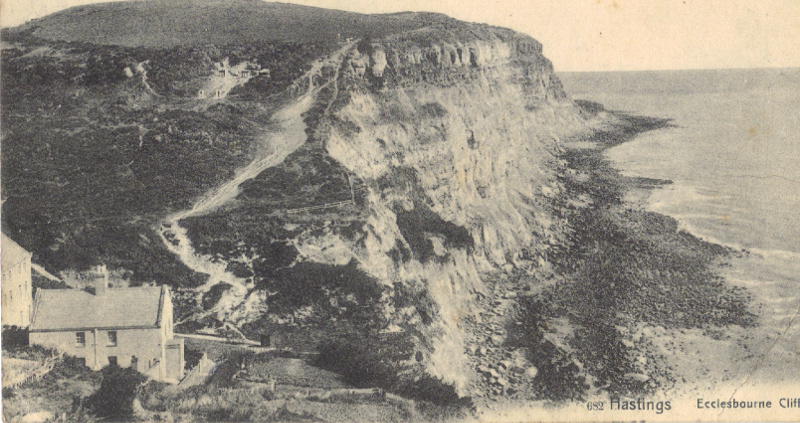
Ecclesbourne Glen early postcard

This has to be one of the earliest photographic postcards of Ecclesbourne Glen, showing the Coastguard Cottages as in it can be seen the rifle range targets and close inspection reveals the flagpole at the top of the footpath on the eastern side of the glen. There was also another flagpole on the East Hill near the 600yd firing position. Presumably these both carried flags when firing was in progress. Note also how much land there is between the closest cottage and the cliff edge, similar postcards show less than half that. Present day the edge is roughly between the 2 buildings.

eg_rr_targets_web

Postcard pages updated

I have added another postcard to the Lovers’ Seat page and also to the 1909 footpath map as it just shows the barn on the skyline that is no longer there. Other items to be included on the map soon include the footbridge at the bottom of Ecclesbourne Glen and a second tea hut in Fairlight Glen once I am sure of their locations.

Possible first for the Country Park

Walking round the top of Fairlight Glen today I had my first and most probably, the first sighting of a completely white albino grey squirrel. Whilst there have been I believe more than one in Alexandra Park I have never heard of one being seen at the Country Park before. Now all I have to do is get a photo! Walking between Warren Cottage and Barley Lane I saw a flock of 100+ goldfinch and 150+ jackdaws going from Barley Lane down to Fairlight Glen.

Fairlight Glen Beech

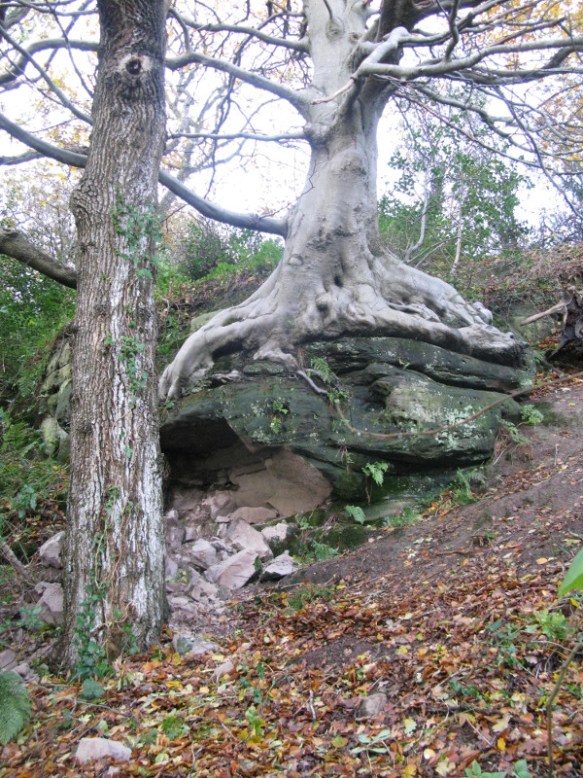
Yes I do mean beech not beach! Those of you familiar with Fairlight Glen can no have failed to spot the magnificent beech tree that appears to be growing literally out of the rock. It seems to have taken a right pasting in last night’s storm but is still hanging on there stoically.

fg_beech_20-11-16

There are a number of branches and small trees down in Warren and Fairlight Glens but are all negotiable.

Another New Record.

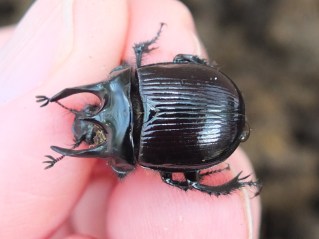
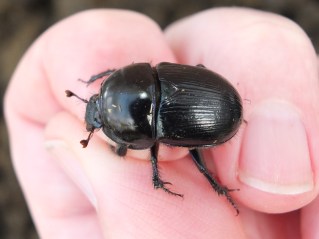
Further investigation of the dung beetles that live in ecosystems created by grazing in the Country Park has produced exciting results. There is a very healthy population of Minotaur Beetles Typhaeus typhoeus in the higher areas of the grazed fields above Warren Glen. This could be because of the very short-cropped grass with areas of poaching that exposes sandy soil allowing ease of burrowing. Turning over piles of dung revealed burrow holes that are typical of geotrupid beetles, and a little rummaging found many Minotaurs. Even better than that was the discovery of a Violet Dor beetle Geotrupes mutator in one of the piles of dung. This is a Nationally Scarce species that is almost unrecorded in the south-east, another good record for the Country Park. This brings the number of dung beetle species in the Country Park to seventeen (so far).

Minotaur                 Typhaeus typhoeusGeotrupes mutator

Mind where you tread (continued)

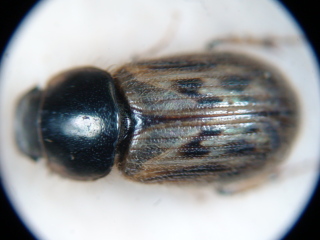
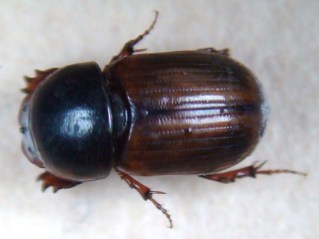
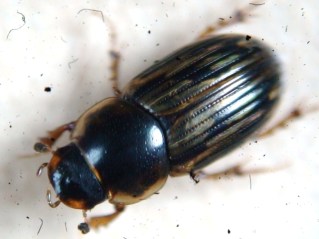
Another dung beetling session in the grazed areas at the head of Warren Glen found seven species of dung beetle, of which three were new to the CP. This bring the total to fifteen species of dung beetle thus far. The new ones were:

Aphodius (Nimbus) contaminatus (upper picture),

Aphodius (Planolinus) borealis (middle picture),

Aphodius (Volinus) sticticus (lower picture).

A.sticticus has been found in Guestling Woods and Battle Great Wood, but A.contaminatus and A.borealis would seem to be new to this area.

Aphodius contaminatusAphodius borealisAphodius sticticus

Longhorns in the Quarry

One of the great benefits of last winter’s cutting of large willows in the quarry is starting to be seen. The log pile that was created by the hard work of wonderful volunteers has come alive in this week’s warm sunshine, and is both a basking spot for Lizards and a prospecting site for the Wasp Beetle. This brightly coloured and attractive native longhorn beetle has been seen in good numbers all over the log stack, and hopefully making a new home for itself.

Wasp Beetle                 Clytus arietis