Right now is a very good time to visit Brakey Bank. There are Bluebells, Red Campion, Greater Stitchwort and Yellow Archangel all out in flower. To coincide like this does not happen every year, so is well worth a look. There is some Lesser Celandine just hanging on as well. Highlight for me this morning was finding 2 White Campion plants just by the footpath. I do not recall seeing it there before.
Category Archives: Uncategorized
A Wasp in Coastguard Field
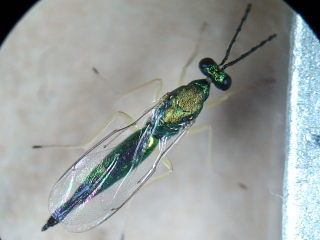
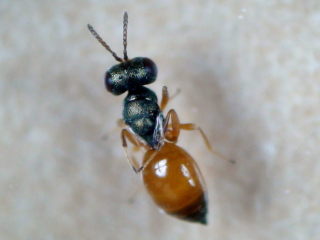
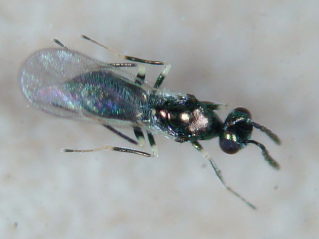
There is a scrubby sallow growing on the seaward side of the hibernaculum in Coastguard Field. Giving it close examination recently discovered a tiny (1.5mm long) parasitic wasp lurking within its branches. It was a Diglyphus isaea, a species that is commercially available as a biological control for several species of leafminer. An adult wasp will seek out the larvae that create leaf mines (in Chrysanthemums for example) and lay eggs in the leaf mining larva. The process will kill the leaf mining larva, and the emerging wasp larva then uses the leaf mining larva as food. While this might sound like a grisly process, it is entirely natural behaviour that has been utilised for commercial benefit. Introduction of such species as Diglyphus isaea into commercial glasshouses gives opportunity for escape into the natural environment, and the one found in Coastguard Field will have originated this way. As to how many generations of parasitoid have passed between the introduction and this discovery can never be known, but it is another new record for the Country Park.
Happy Christmas!
This website would like to wish all our visitors and fellow users of Hastings Country Park a Happy Christmas and much enjoyment of the Country Park’s natural resources in the New Year.
A Winter Wasp
A colourful wasp was recently found in the sallow growing before the exposed rockface at the back of the quarry. It is Microterys seyon, a tiny wasp that is a parasitoid of soft brown scale Coccus hesperidum. Its discovery was a first for this area, and most unexpected.

International Teamwork Identifies a New Species for the Country Park.
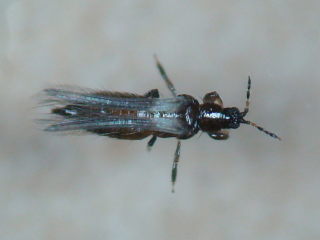
A sunny autumnal stroll along the clifftop path on the Firehills has produced an interesting result. A Thrips was found within the grass and gorse at the point where the cliff falls away, it is a tiny insect of no more than 2mm length, of the Order Thysanoptera. Examination under the microscope proved it to be a Thrips but further identification needed greater expertise. The Thrips was delivered to Dr. Manfred Ulitzka in Offenburg (the world expert) and he has identified it as a female Odontothrips ulicis. Dr.Ulitzka was very pleased to make this identification as he only has one example of this species in his collection, and his is a male – hence he is delighted to have filled a gap in his collection. The record of this Thrips has been placed, and it is only the sixth UK record at the Biological Records Centre and the first record on the National Biodiversity Network Atlas. The Country Park has done it again.

A Wasp on the Firehills.
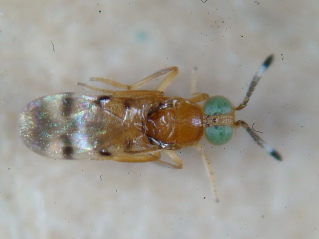
Removal of blocks of single-age gorse on the Firehills has created significant areas of new habitat, and it is interesting to observe colonisation of this new habitat. The past couple of weeks has seen the cut and removal of two year’s growth, and has left a short stubble of gorse and grass. A survey of this seemingly unwelcoming habitat found a most distinctive wasp. It was one of the parasitic wasps that tend to be parasitoids of gall-forming insects or mites. Identification proved a challenge, but we can now relish the thought that Sympiesis dolichogaster has been found in the Country Park. That might not seem too exciting at first reading, but the only other UK record was on the Isles of Scilly, hence it appears to be the first mainland UK record.

Saying goodbye to our summer visitors
Having become used to the sight of Stonechat on the Firehills, I nearly missed this one, the very similar looking Whinchat that has come to the coast ready for it’s autumn migration to spend the winter in Africa. Many other species of birds will also be seen arriving around now at the Country Park, embarking on similar journeys.
Birch Polypore
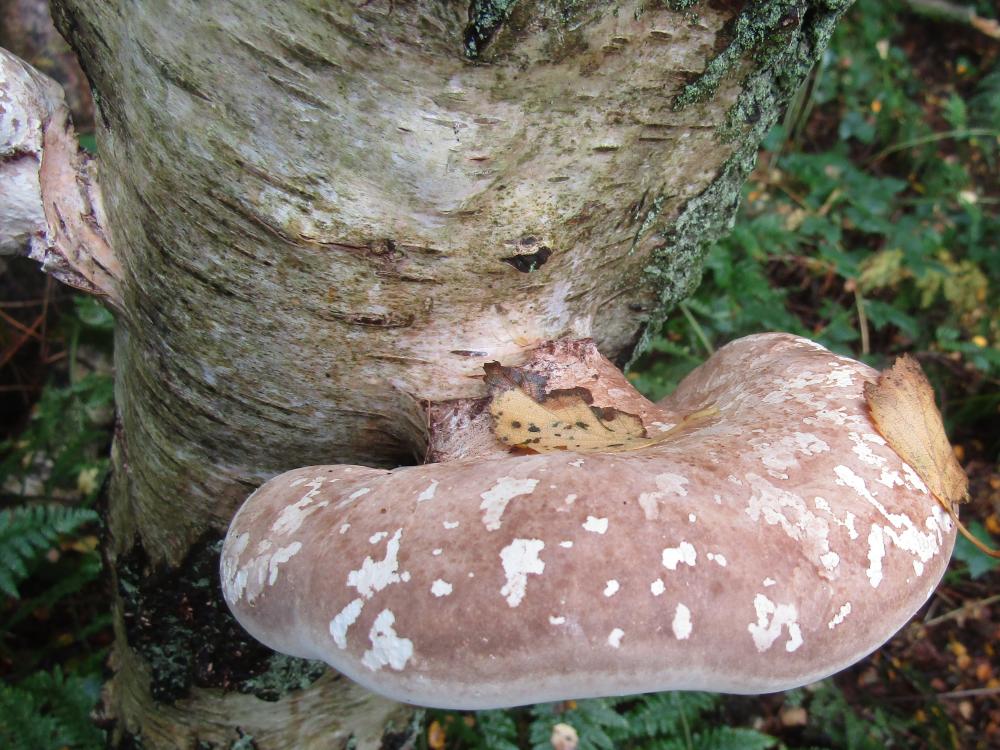
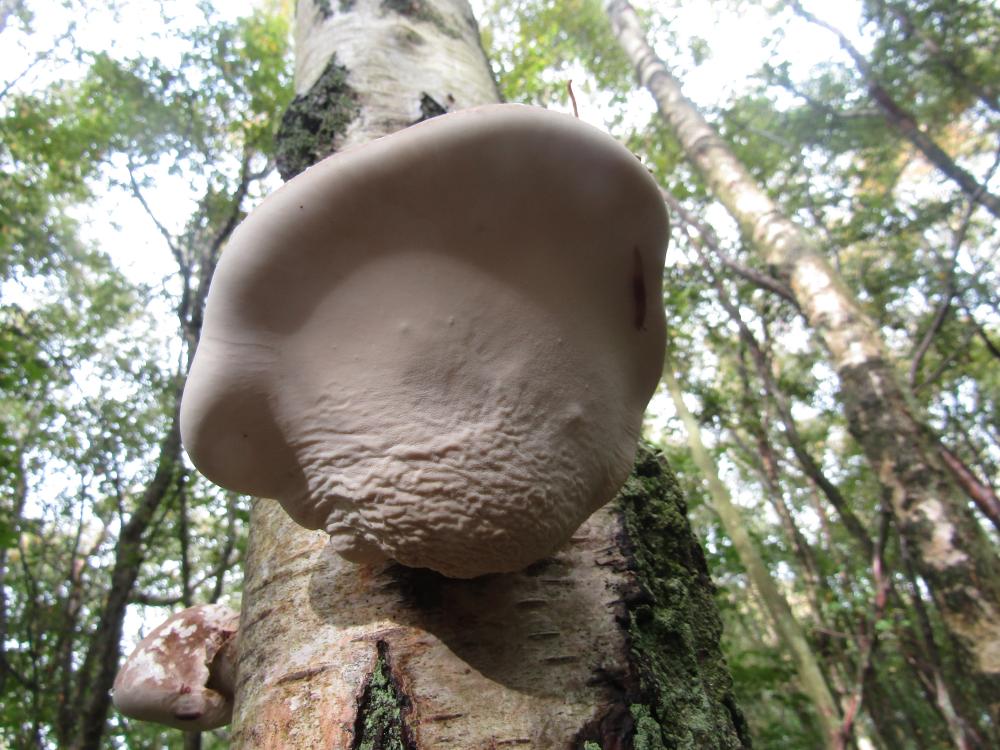
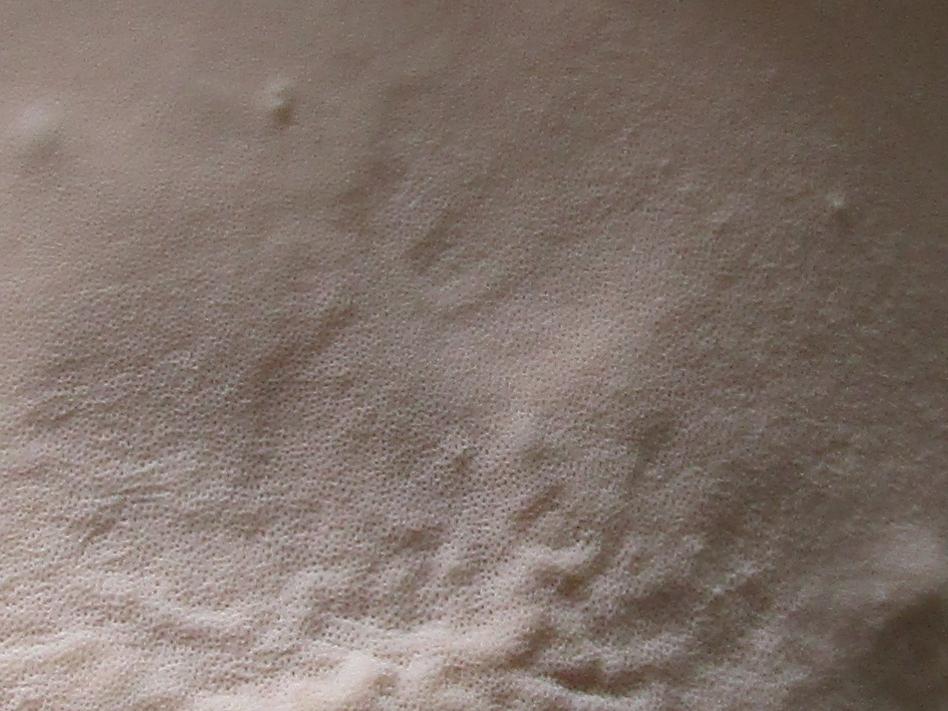
I first spotted this fungus probably about a couple of weeks ago, just emerging from the bark of a dead birch in the “Plantation”. It was just a white sphere then but has now developed into something that I have been able to identify. A “bracket” fungus which has no stem (stipe) and whose spores come out of tiny pores (see bottom photo) unlike mushrooms where they come from gills under the cap. A lot of other fungi appearing at the moment particularly on the cleared areas of the Firehills, so more to follow on this subject.
Cold War Wasp
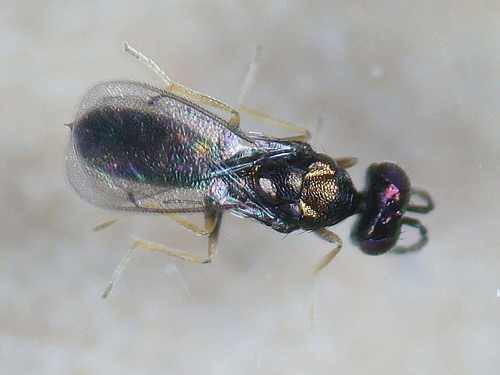
Encountering the Cold War Bunker in the Country Park is often the start of many questions springing to mind. When was it operational, how many service personnel were stationed there, what is its layout, why did they knock down the guardhouse? Are just a few of the typical questions. One of the less frequently asked questions is “what species of wasp could that be?” A walk atop the bunker yesterday brought the discovery of a tiny wasp, less than 2mm long, but very beautiful with its distinctive colouration. Callitula pyrrhogaster is one of the flightless parasitic wasps and there are very few records of its presence. It is said to be a reasonably common species but almost no one bothers to identify this branch of wasps as they are so difficult. As a result this is another first for the Country Park and another first for Sussex.

Beauty Contest?
Ivy growing over the Visitor Centre provides an interesting habitat to study if you wish to monitor invertebrate life without wishing to go very far in the Country Park. One of the regular visitors that might be found over much of the year is a very strange looking creature. The Issid Hopper Issus coleoptratus is a relatively large hopper at approximately 6mm, but its shape and form make it seem considerably larger. The elytra are covered with a strong network of veins and there can be dark forms as well as the more common grey form. Its face is beyond description, beautifully ugly, unsettling yet endearing, definitely unforgettable. Its ability to jump is noteworthy. The jump does not come from its legs but from mechanical gears in the thorax. It is a very odd creature but always a pleasure to see.