Firehills gorse clearance

This year’s round of gorse scrub management has started today on the Firehills. Please take care and give the machinery a very wide berth. There are warning signs in place but the machinery will be moving between compartments and there will be traffic to and fro removing the arisings.

For your dog’s safety please put them on a lead as I did with mine today.

Visitor Centre out of season opening hours

Our colleagues at the Visitor Centre have informed me that now the holiday season is over and with their number about to be reduced by one, that from Friday 25th September the opening hours will be reduced to 10.00 am to 3.00 pm, Friday, Saturday and Sunday only, staff availability permitting.

This is still more than a great many other volunteer manned visitor centres that are only open at weekends all year round and we should all be grateful for their commitment.

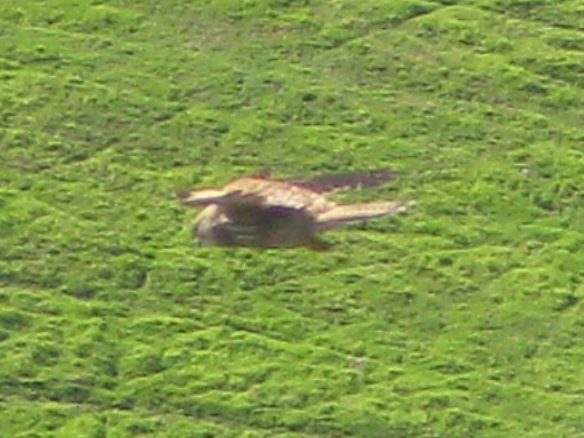
Kestrel today - Warren Glen

Kestrel today – Warren Glen

Water Crowfoot identification isn’t easy!

Some flowers and floating leaves have appeared on the  Water Crowfoot at Saxon Pond making my original identification wrong. It is now probably Brackish Water Crowfoot but may be Pond Water Crowfoot and without a seed I cannot be sure even after trying 3 different books.

The water level has risen a lot after this weeks rain, so we finished the job just in time. Still plenty of dragonflies, swallows and house martins today.

Walking home I saw a flock of around 50 goldfinches along the “Bon Jovi” path many of which were juveniles and a male peregrine and a raven having a ding dong above the Quarry.

Dry blackthorn but no cider

Today we started our contribution to this year’s round of scrub clearance under the Higher Level Stewardship agreement for Hastings Country Park Nature Reserve and it looks like we got the only dry day this week!

This involved removing mainly blackthorn scrub to the north of Ecclesbourne Meadow. We are doing this in “scallops” of irregular shape which Natural England believe will result in a better diversity of plant species in the regeneration that follows due to more variable light and shade than if straight lines were used.

Travelling across the fields we saw a number of Wheatear and Stonechats.

Unless another more urgent job arises we’ll be back there next week with maybe a bonfire  but dependant on numbers on the day.

Another First for the Country Park.

The huge quantities of large migrant hoverflies that were so evident on the hogweed when it was in flower were of the species Scaeva pyrastri. Although a migrant from Europe, large numbers may be expected in the Country Park each year. There is another hoverfly of the same genus that is equally large and conspicuous, yet it had never been recorded in the Country Park until this month. A good number of Scaeva selenitica have been observed on the Bristly Ox-tongue flowers outside the visitor centre in the moments when the sun has graced us with its presence.


Odd Couple outside the Visitor Centre.

The yellow flowers of Bristly Ox-tongue outside the Visitor Centre are being frequented by two species of hoverfly of the same genus. One is common hereabouts, the other has not been recorded here before. Both are recognisable by the sharpness of the elongate black wing stigma. Dasysyrphus albostriatus is frequently seen and is recognisable by the white thoracic stripes that inform the name. Dasysyrphus tricinctus is noticeably darker and has a very uneven yellow stripe configuration on the abdomen.


Volunteers treated to aerobatic display

Yesterday we carried on cutting back the water’s edge scrub at Saxon Pond and saw an amazing display of Swallows and House Martins swooping down and skimming across the surface of the pond, feeding. Ruddy Darters and Blue-tailed Damselflies were again present too.

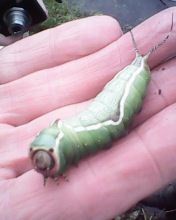
We also came across this caterpillar, which despite it’s size is not a hawkmoth as first thought but a Puss Moth.

Puss Moth caterpillar

Puss Moth caterpillar

The foodplants of these caterpillars is Aspen and Willow, particularly low regrowth and is camouflaged to suit.

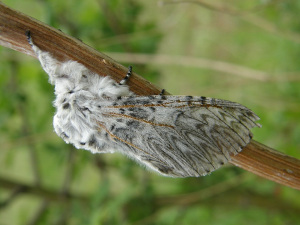
Puss_Moth2

Puss Moth

The rain held off ’till we were ready to pack up and we’ll be doing another day there to finish off.

Ruddy Darter on Great Willowherb.

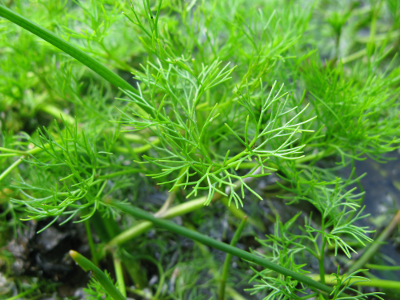
I made another visit to Saxon Pond yesterday to attempt to identify a plant that had so far eluded me. I am now fairly certain that it is Thread-leaved Water-crowfoot .

t-l_water_crowfoot

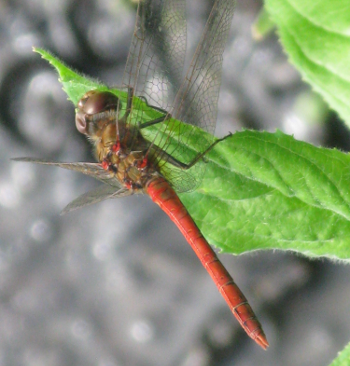
The sunshine treated me to a wonderful display of darter dragonflies (15+), which this photo enabled me to identify as Ruddy Darters.Ruddy_darterI also saw Emperor dragonflies, Blue-tailed damselflies plus Small Tortoiseshell and Holly Blue butterflies.

Hoping for some sunshine on Thursday, so the rest of the group might see these amazing sights too.

Back to Saxon times

Yesterday saw a welcome return to Saxon Pond for some of us and a new part of Hastings Country Park for others.

The purpose was to cut back the vigorous willow regrowth that was starting to shade out the bankside and emergent vegetation that had established itself since we finished the initial clearance in 2012. Species now present include Great/Common Reed Mace, Soft Rush, Sea Club-rush, Water Horsetail, Bittersweet, Fleabane, Great Willowherb and Common Ragwort which has managed to establish itself on one of our log islands.

We’ll be back to carry on next week.

Great Reed Mace

Great Reed Mace