Country Park Parasites.

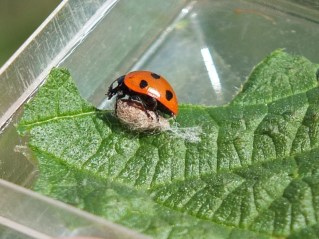
7-spot ladybirds are a regular sight everywhere around the Country Park, including the patch of nettles outside the VC. A close look at one revealed that it was unmoving and appeared to be sitting on a nest. The apparent nest is the cocoon of a parasitoid wasp Dinocampus coccinellae. The adult wasp is found in all continents except Antarctica and has been reported to parasitise 13 of the UK species of ladybird, but the majority are from the subfamily Coccinellinae, of which the species most frequently seen around the Country Park is the 7-spot ladybird. The adult wasp lays an egg within the body of the ladybird, that egg subsequently goes through three larval stages (instars) before emerging as a yellow maggot from the ladybird’s abdomen. It then spins a silken cocoon between the legs of the host, and pupates. The ladybird does not survive.

There is a new nationwide research project seeking to record the prevalence of Dinocampus coccinellae around the UK in order to determine whether it is increasing as a result of disruption to the natural balance between the 7-spot and the parasitoid wasp since the arrival of the Harlequin.

Information about this research project may be found here: https://ladybirdchallenge.co.uk/ and records of sightings are welcomed.

7-spot with Dinocampus coccinellae

A sad day for the Country Park

A group of us volunteers attended a meeting with management today thinking we were going to consolidate some points from our last meeting with regard to our working as an autonomous group. Little did we know that instead we were to be told that it had been decided that we could not operate in future without a Ranger present, despite having in reality done so for a number of years. The upshot being that with the reduction of staff it will only be possible to run 10 conservation days a year, this being in contrast to us having been doing  every Thursday and the first Sunday of every month plus some Fridays some 65+ days. This is a massive reduction and presumably the slack will have to be taken up by contractors and one can only wonder where the money is to come from when we are told that HBC has to make further cuts in spending in the coming year.

For us it will be so frustrating to see areas that we have been looking after deteriorate due lack of time if no-one else does do the work. It now remains for us to wait and see when these 10 days are going to be.

Sunshine at last…

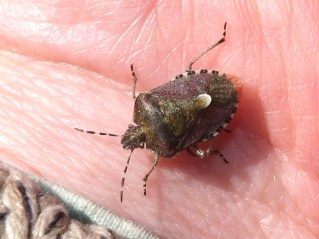
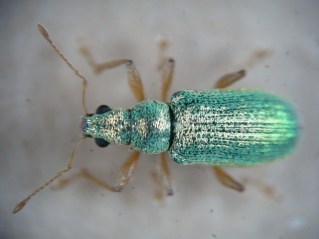
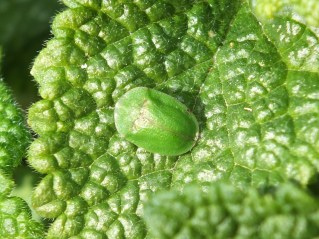
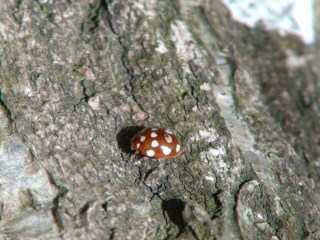
It seemed appropriate to mark the relenting of that persistent cold wind with a stroll in the quarry to see if any insects would appear in the very welcome sunshine. Winter clearance work by the Volunteers has created perfect new habitat on some of the banks in the quarry and enriched this site. A first glance at the unfurling leaves on willow regrowth near to the exposed rock faces saw a Cream-spot Ladybird and a brilliant metallic green/gold Weevil (Polydrusus pterygomalis). Turning into the open quarry a Small Copper butterfly was flitting around the Wood Sage and warming in the sunshine. A closer look at the Wood Sage saw a Green Tortoise Beetle and a Sloe Bug (or Hairy Shieldbug if you prefer). All of these beautiful insects were in habitat that has been created by the diligent work of the Volunteers, to whom we say thank you.

Cream-spotSloe BugPolydrusus pterygomalisGreen Tortoise Beetle  Cassida viridis

Helipad wildlife.

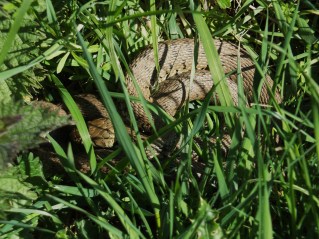
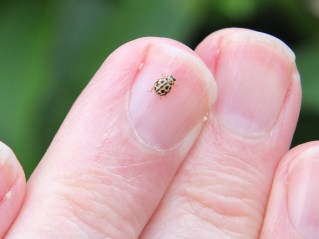
Early morning sunshine at the helipad found a beautiful grass snake basking in the longer grass at the Fairlight Road side of the site. Further inspection of the area found eleven 7-spot ladybirds, one of which was parasitised with a wasp (Dinocampus coccinellae). Nearby were two 16-spot ladybirds.

6pvvat2v8k1gj9sazux

North’s Seat (part three)

Further attempts to identify the plentiful small invertebrate wildlife of North’s Seat (and keep out of the bitterly cold wind) have found a Birch Shieldbug Elasmostethus interstinctus, a Cream-spot Ladybird Calvia quattuordecimguttata,  and another two Weevils – a female Polydrusus cervinus and a Polydrusus tereticollis.

Birch ShieldbugPolydrusus cervinus? femaleCream-spotPolydrusus tereticollis

The Little Things in Life.

Taking a look at the national records for Gorse Weevil the closest records were on the Downs beyond Eastbourne, and they were the only records in the county. The species is described as being fairly frequent and widespread in England and Wales yet we had no records hereabouts, and there seem to be only 66 records nationally on the Biological Records Centre database, and 1566 records on the National Biodiversity Network database which goes back 200 years. Surely the gorse of the Country Park could furnish a record or two!

The Gorse Weevil is about 2mm long, is light grey in colour with a long snout half as long as its body. The adult feeds on Gorse by digging into the soft tissue of the stem and spines with its snout, creating characteristic round holes as evidence. The larva does more damage, however. It emerges from its egg inside the gorse seed pod and feeds on the seeds for six to eight weeks. The larva then pupates for about two months.

Taking the opportunity of a lull in the throng of visitors to the VC on Friday (!) gorse was beaten between the VC and the horseshoe car park, and there were 2 Gorse Weevils. Close examination under a x20 hand lens confirmed the species identification and records were duly submitted. Hastings Country Park is on the map once again.Gorse Weevil  Exapion ulicis

Is it a bird, is it a plane…

In such a quiet location as the Country Park extraneous noise creates a heavy imposition. The sound of airliners flying overhead seems much closer than their tens of thousands of feet in height. In recent weeks and months there has been a noticeable increase in the number of helicopters flying along the coast past the Country Park. Some of these flights are the Coastguard helicopter that is now based at Lydd, and their helicopter is immediately recognisable in its red and white livery when well lit, but if the sun is behind it and the colours are less visible then it can be more of a challenge to identify.xcw2ns

Picture Frame.

An unexpected benefit of the recent gorse clearance on the Firehills has been the opportunity to frame familiar views in a different way, and hence to look afresh at the Country Park and its surrounding landscapes.