Another Lacebug

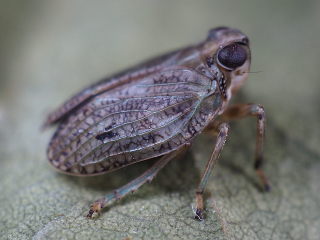
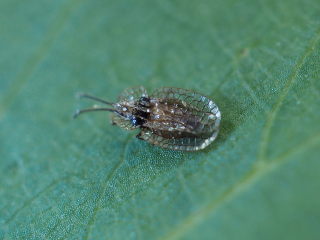
Removal of the blocks of single age gorse on the Firehills has created large areas of new habitat in the Country Park, and it is interesting to see which species are colonising this newly available area. One unexpected delight was a species of Lacebug Derephysia foliacea. It is quite a distinctive lacebug as it has a single row of large meshes around the outer rim of the forewing. It is almost transparent and very small, and hence difficult to find but definitely worth seeking.


Derephysia foliaceaDerephysia foliacea

Cockroach in the Country Park

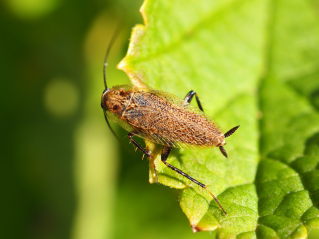
Another species of insect that only gets reported in a bad light is the cockroach. If your initial reaction is to shudder you can thank decades of sensationalist news reports. The cockroach that can become a pest of commercial kitchens and factories is a non-native species and doesn’t live in open countryside. Most people are unaware that there are three native species of cockroach – all are small and scarce. In the Country Park we have the Lesser Cockroach Ectobius panzeri. It used to be found only in the quarry, and even there it was a rare find. Removal of gorse on the Firehills has made available a new area of habitat that is to the liking of the Lesser Cockroach. This summer it has been found on the Firehills on three occasions and is doing very well in the maritime heath environment. It is a small species, up to 10mm long, and a very fast runner.


Lesser Cockroach - Ectobius panzeri

Those Unseen Things

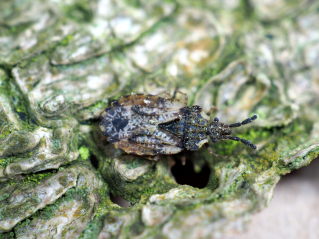
At the back of the quarry is an apple tree whose trunk is growing at a 45 degree angle, and it only gets noticed when in flower. If you care to look very closely you might be lucky enough to observe movement in the bark crevices. Flatbugs are aptly named insects whose bodies are very flat so as to enable them to move in the spaces beneath tree bark. There are seven UK species of flatbug, and one of them is thriving in the crevices of the quarry apple tree. Aradus depressus is difficult to see as it is perfectly coloured to blend against bark, but its form is similar to the spear-thistle lacebugs that also thrive in the quarry.


Aradus depressus

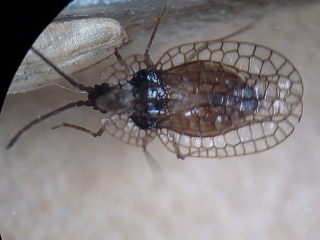
Another Lacebug.

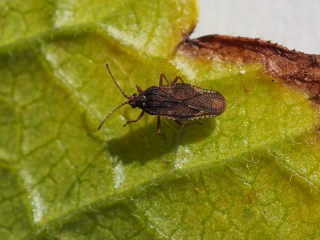
There is an old hawthorn hedgerow beyond the blast shelter in the quarry and it is covered with lichen. I will happily leave identification of lichen to others, but there is a rather beautiful insect that lives in lichen growing on old hawthorn. It is one of the Lacebugs but is much darker than the frequently seen spear-thistle lacebug, it is a very narrow species and is only 3mm long … but is definitely worth seeking out. If you should find it, you will be looking at Physatocheila dumetorum.


2le54jq

A Positive Item About Ragwort

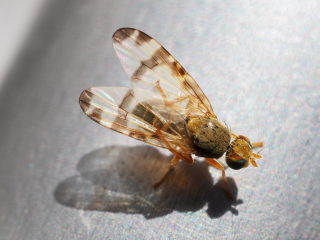
Ragwort gets a lot of bad publicity, and a lot of time and expense is dedicated to its control. There is no doubt that it can pose a threat to livestock if it is incorporated into hay as the wilting process makes some nasty alkaloids available in livestock feed, but there is also a positive side to Ragwort that garners fewer news reports. Many people have seen the yellow and black striped caterpillars of the Cinnabar moth feeding on Ragwort, but how many have seen the Ragwort Fly Sphenella marginata? It is one of the tephritid flies, a type of picture-winged fly, and its larvae form galls on Ragwort. Other species of tephritid fly have been seen regularly on thistle in the quarry and other areas of the Country Park, but this is the first time the Ragwort Fly has been found here. It is heartening to think that the ever-present Ragwort is helping to increase biodiversity in the Country Park.

Sphenella marginata

A Very Unusual Wasp

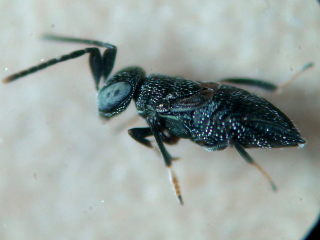
A look through the Rush flowering in the seasonal pond of the quarry produced an unexpected result recently. A flightless species of parasitic wasp, less than 2mm long, that moves around by jumping. It parasitises scale insects and other very small bugs. Close inspection showed it to be a metallic blue/black colour, and very difficult to see. Its antennae have a distinctive flattened section that fits into a groove atop its head if needs be. In some cases a single egg of this family of parasitoids can give rise to several thousand larvae, and the egg retains a stalk that protrudes from its host to allow air to the young larva. There are very few records of this native species, and this is a first for the Country Park.

Dinocarsis hemiptera

A visit from the Galatea

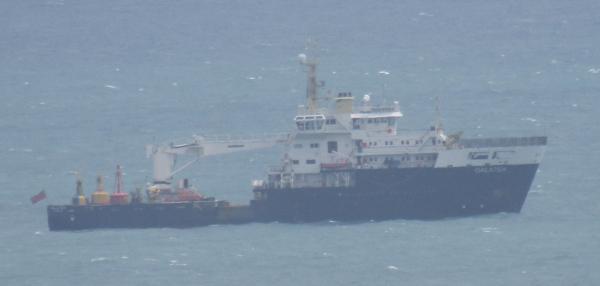
Ok, not actually in the Country Park but the Trinity House vessel Galatea has been visible offshore from the Country Park for a few days now. She was working at the Royal Sovereign light tower but today moved round to a position a little over 3 miles off Fairlight. Her duties include the maintenance and installation of navigational buoys, surveying and wreck marking for Trinity House and is also available for hire. She is equipped with a 30 tonne crane, a helicopter pad and carries a high speed work boat.

Today, Sunday 23rd, she is at the Rye Fairway Buoy which is about 3 miles out from Rye Harbour where cargo ships going into Rye anchor and wait for the pilot boat. A fairway buoy is a safe water mark and in this case marks the centre of the approach channel into Rye Harbour. The buoy seen on the stern of the Galatea in the photo, furthest from the stern and taller than the other 2 is a fairway buoy.

A Small Visitor.

The area of the quarry that was so expertly cleared by the conservation volunteers a couple of years ago received an inspection this week from an illustrious visitor. A shieldbug flew over from France in order to spend some time in this desirable location, and in so doing notched up a county first record for the species and the Country Park. Carpocoris purpureipennis is a shieldbug that occurs in France but has only ever been recorded in the UK on one or two occasions in the past. It is somewhat larger than the Sloe Bug although overall colouration is similar, but it cannot be mistaken for that native species. A very distinctive and very welcome discovery.

OLYMPUS DIGITAL CAMERA