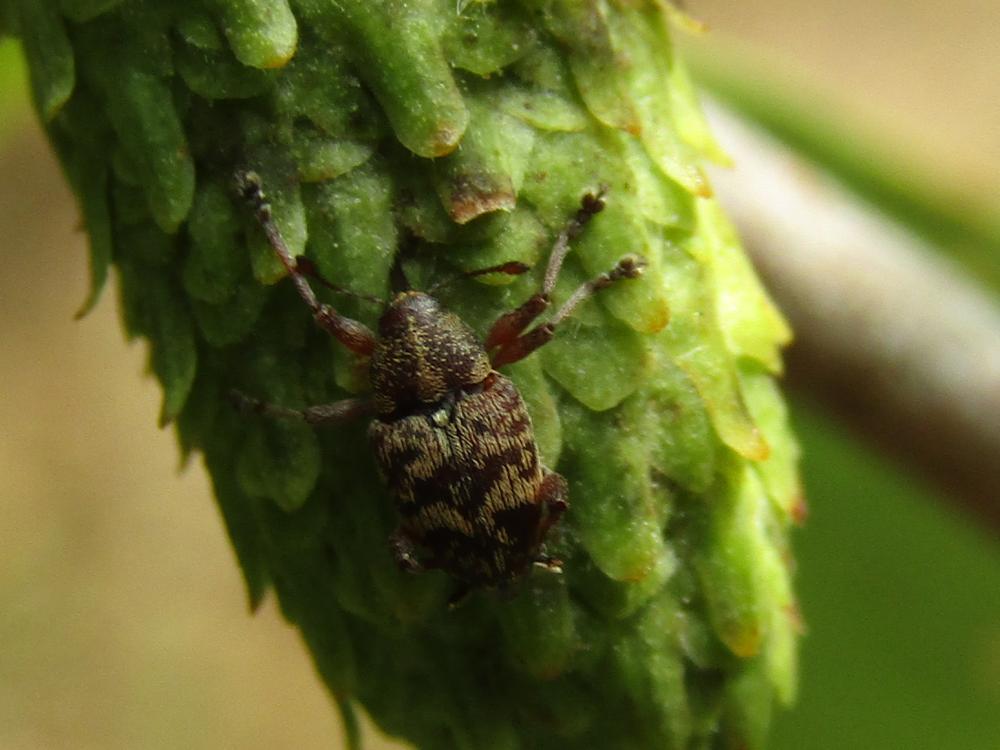
A new species for the Country Park is great but when it is also a new record for East Sussex as well!! I have just had verification from the National Weevil and Bark Bug recording scheme that this is the case for a weevil, Curculio betulae that I found on a birch catkin on the Firehills last Tuesday.
Another Thrips species in the Country Park.
Another new Thrips has been found and identified in the Country Park. It was found on the gorse, grass and heather stubble that has established on the Firehills since the removal of single-age blocks of gorse. The insect is just under 1mm long and required the skills of an expert to identify it. Enquiries were made to Dr.Manfred Ulitzka in Offenburg who has identified it as a micropterous female Sericothrips staphylinus.

Dr.Ulitzka made some very good pictures that show much greater detail than I am able to achieve and we are grateful both for his help in identifying the Thrips and his permission to reproduce the images here. The second picture shows characteristic microtrichia on the metascutellum.
It has been interesting to see the great increase in insect biodiversity on the Firehills since the removal of those old single-age blocks of gorse that supported very little life. It was an excellent piece of habitat improvement. We can only hope that future management decisions might be evidence based rather than led by the latest grant availability.
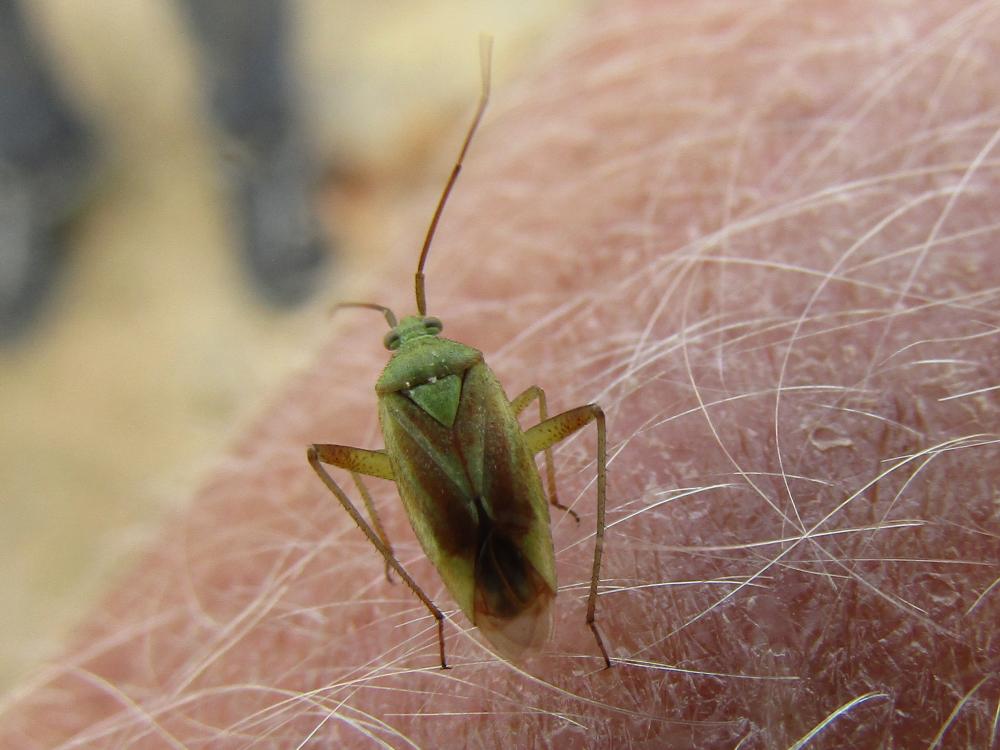
A long way from any potatoes
It seems that we have yet another new species record for the Country Park. Closterotomus norwegicus aka the Potato Capsid. This belongs to a large group of bugs collectively known as Mirid or Plant bugs and although it is called the Potato Capsid, the excellent British Bugs website tells us that it feeds on a wide range of plants, especially nettles, composites and clovers. Found yesterday on the Firehills not far from the radar.
A watchful eye
Seen this morning from the Firehills, the fisheries patrol vessel Watchful whose home port is Shoreham and is capable of an impressive 23 knots and carries a crew of five. Her job is to protect the fisheries and conservation sites of Sussex and her duties include not only enforcement but marine research as well. She has a RIB that can be launched from the stern for boarding and inspection of fishing vessels at sea.
Meet the Parents
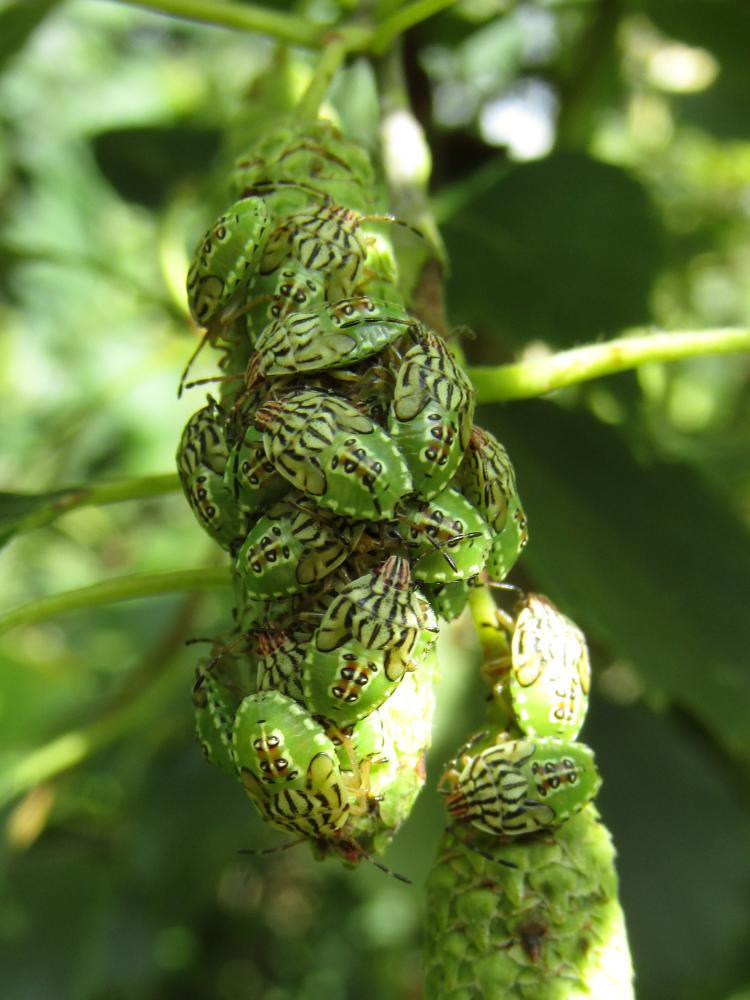
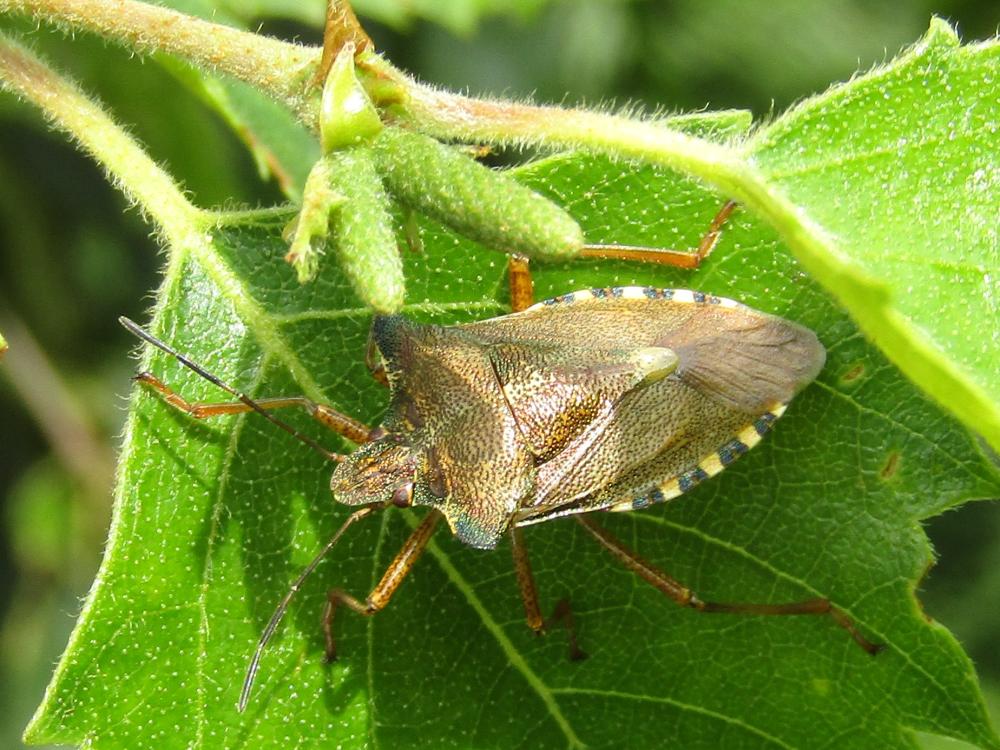
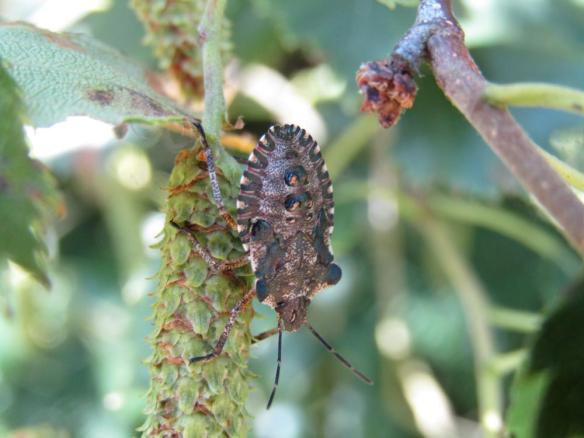
I have been keeping an eye on the birches where I first spotted the second instar nymphs and have managed to get a photo of final instar nymphs a week ago and today a number of adults. It seems that the adults photo is a little special as a couple of experienced recorders of shieldbugs have not seen adults crowded together thus on a leaf. I have only found one other similar photo on the internet so it would seem that not many people get to see this as the adults split up quickly it would seem and I am rather privileged to be one of those.
Also seen today 3rd and 4th instar Birch Shieldbug nymphs.
Update from my last post, Parent Bugs
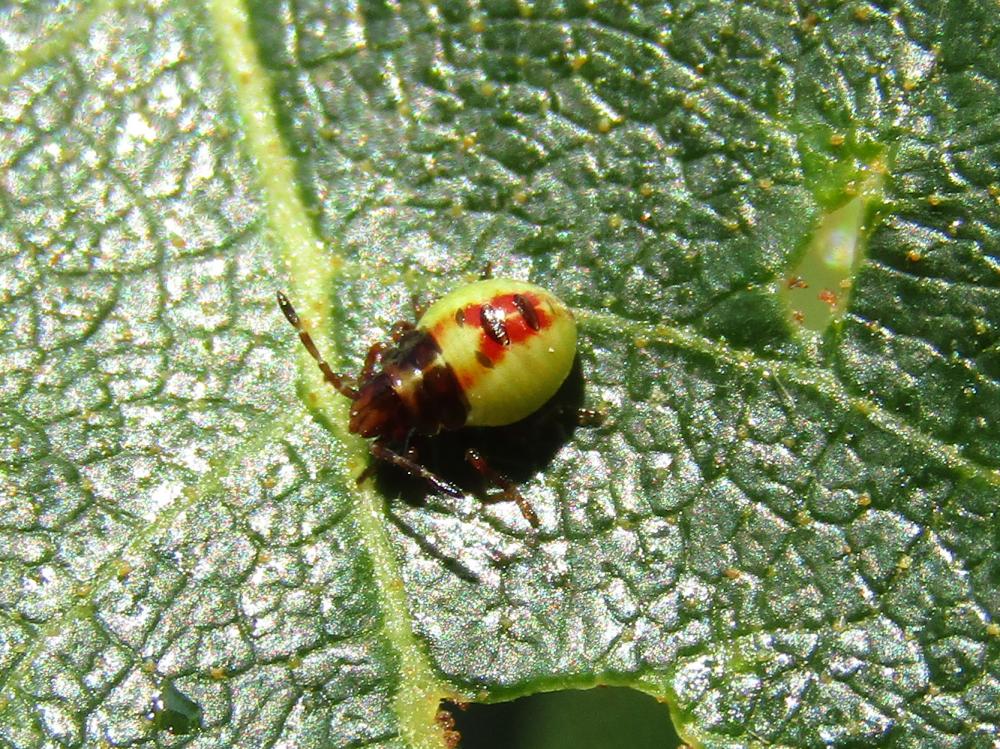
Well, persistence as recommended to me has paid off and I have to thank Taughtus for that and all the help with shieldbug and other id’s! Accessible online records do not show any records for Parent Bug at the Country Park, so I’m presenting this as a new record for the Country Park, 35+, 2nd instar Parent Bug nymphs on a birch leaf on the Firehills. To put this in perspective, this is not considered a rare species, this just highlights the lack of co-ordinated monitoring on the largest nature reserve within the borough of Hastings. The records on this site are provided gratis and with no encouragement from Hastings Borough Council. I hope to return to the area at a later date to record an adult. Also found this morning, an adult Forest Bug, which I am told is the first record of an adult for the Country Park.
Jewels in the Grass
In the rough dry grass of the Firehills during the long lazy days of summer we might glimpse the jewel like beauty of a Ruby-tailed Wasp. These small colourful wasps are cuckoo species that are associated with specific hosts. A visit to the Firehills this week has seen two species of Hedychridium. One has a dull red abdomen and is a little larger, Hedychridium roseum is frequently found in open sunny areas and is closely associated with a Crabronid wasps as its host. The second species was even more colourful but a little smaller. It is always worth keeping an eye open for Ruby-tailed Wasps as their colour never fails to please.

Forest or Red-legged?
Looking at Birch trees on the Firehills yesterday in the hope of finding a Parent Bug yielded a different shieldbug, the Forest Bug, also known as the Red-legged Shieldbug. I have recorded this one before but not in the Country Park and this is only the second record that I can find for the Country Park either on iRecord or the NBN Atlas, so a worthwhile find. This is not yet an adult but in it’s final instar stage.

Wasps in the Meadow.
The area of flower-rich meadow opposite the first car park off Lower Coastguard Lane is widely known as Kay’s Meadow, and it is always worth a good look for its abundance of wildflowers and insects. An unusual insect has just been found therein that would be missed by most as it is only 1.1mm long. It is Trimorus punctulator – a wasp that has no wings as such yet it has antennae that are easily twice the length of its body. It hunts prey by jumping, and is a parasitoid of the eggs of insects and spiders. It is one of the Scelionid wasps.

A Curious Sight.
Occasionally one may peer into the grass and see something that makes one wonder why evolution has gone down a particular route. A recent walk across the Firehills found a brightly coloured wasp sporting some interesting accoutrements. Hanging below its face were a pair of globular things that seemed to defy logic. They are the swollen tips of the maxillary palps, but their size would suggest that they must have some purpose. Speculation is rarely wise, but in this case one might speculate that the globular things could perhaps be involved in the detection of pheromones. The wasp is a male Halticoptera hippeus of the family Pteromalidae, it is one of the Chalcid wasps that are parasitoids of insect eggs.